How to choose a suitable microchannel flat tube
Information summary:1. Consider channel structure and size
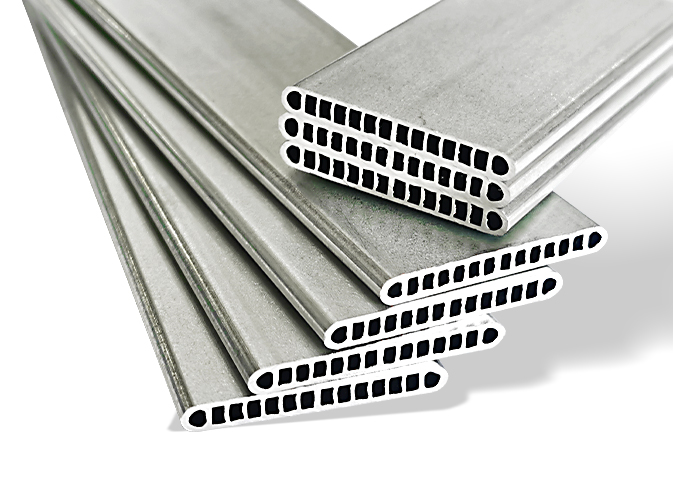
Number and shape of channels: The number of channels in a microchannel flat tube will affect its heat transfer efficiency. Generally speaking, having a larger number of channels can increase the heat transfer area, but it may also increase fluid resistance. Common channel shapes include rectangles, ellipses, etc. Rectangular channels are relatively eas
1. Consider channel structure and size
Number and shape of channels: The number of channels in a microchannel flat tube will affect its heat transfer efficiency. Generally speaking, having a larger number of channels can increase the heat transfer area, but it may also increase fluid resistance. Common channel shapes include rectangles, ellipses, etc. Rectangular channels are relatively easy to process and assemble, while elliptical channels can better optimize fluid flow conditions in certain situations. For example, in automotive air conditioning condensers, choose flat tubes with appropriate channel shapes and quantities based on different cooling needs and space constraints.
Channel size: The height and width dimensions of the channel determine the flow rate and velocity of the fluid. A smaller channel size can create a higher flow velocity for the fluid, thereby enhancing heat transfer efficiency, but it is also prone to clogging. The selection needs to be based on specific fluid properties (such as viscosity, impurity content, etc.) and flow requirements. For fluids containing small particles, the channel size should be appropriately increased to avoid particle blockage.
2. Select based on material characteristics
Thermal conductivity: The thermal conductivity of the material is a key factor. Good thermal conductivity materials can improve heat transfer efficiency. Aluminum is a commonly used material for microchannel flat tubes because it has a high thermal conductivity and can effectively transfer heat from the fluid to the surrounding environment or other media. For applications that require high heat transfer efficiency, such as the cooling system of electronic products, flat tubes made of copper or copper alloy materials with better thermal conductivity may be chosen.
Corrosion resistance: If the fluid in contact with the flat tube is corrosive, then the corrosion resistance of the material becomes particularly important. For example, in the heat exchange process of the chemical industry, fluids may contain corrosive components such as acids and bases. At this point, materials with good corrosion resistance, such as stainless steel or aluminum flat tubes that have undergone special surface treatment, should be selected to ensure the service life and performance of the flat tubes.
3. Determine based on work pressure and temperature range
Work pressure: Microchannel flat tubes need to be able to withstand the pressure in the working environment. The pressure requirements vary in different application scenarios, such as in refrigeration systems where the pressure is relatively low; In some high-pressure heat exchange systems, such as certain industrial steam systems, flat tubes need to withstand higher pressures. The pressure resistance level of the flat tube should be selected based on the working pressure of the system to ensure that it will not rupture or leak during use.
Working temperature range: Consider the temperature range within which the flat tube can operate normally. High temperature environments may affect the performance and structural stability of materials, while low temperature environments may cause materials to become brittle. For example, in aerospace heat exchange systems, flat tubes need to be able to operate normally within an extreme temperature range, from low-temperature high-altitude environments to high-temperature areas near the engine. Therefore, it is necessary to choose flat tube materials and structures that can adapt to this wide temperature range.
4. Combining system compatibility and integration
Compatibility with other components: The microchannel flat tube should be well compatible with other components in the entire heat exchange system, such as joints, headers, heat sinks, etc. Ensure that the interface size and connection method of the flat tube match other components for easy installation and maintenance. For example, in a car radiator, the connection between the flat tube and the inlet and outlet pipes should be tight, leak free, and easily assembled with the radiator frame and fins.
Spatial integration: Consider the spatial layout of flat tubes in practical applications. In some compact devices, such as the heat dissipation module of small electronic products, it is necessary to choose a flat tube with appropriate shape and size to achieve efficient heat exchange in a limited space. At the same time, the bendability or machinability of the flat tube should be considered to adapt to different spatial shapes and installation requirements.
5. Consider cost and economy
Material cost: The cost of microchannel flat tubes varies greatly among different materials. On the premise of meeting performance requirements, try to choose materials with lower costs. For example, the cost of aluminum flat tubes is usually lower than that of copper flat tubes, and in some cost sensitive applications such as ordinary household air conditioners, aluminum flat tubes are a more suitable choice.
Maintenance and replacement costs: Consider the maintenance and possible replacement costs of the flat tube during use. If the flat tube is prone to damage or has a short service life, frequent replacement will increase costs. Some high-quality and durable flat tubes may have a higher initial purchase cost, but in the long run, they may reduce overall costs.

 CN
CN EN
EN 
 微信號:WEIXINHAOMA



 Service Hotline:400-100-7068
 Address: No. 15, Liuzhou Road, Yushan High-tech Industrial Park, Changshu
 E-email:info@sinupower.com



 Wechat
 Visit us
 Please Call